London's urban expansion over the last two centuries has reshaped its shallow geology. The Thames Valley floodplains and extensive brickearth deposits create a complex clay profile. Many Victorian foundations were built without modern soil classification. That legacy means current projects require precise Atterberg limits data to predict long-term settlement. We determine liquid limit, plastic limit, and plasticity index using the Casagrande cup and rolling-thread method. These parameters directly affect bearing capacity and compaction control. For sites underlain by London Clay, knowing the plasticity range is critical before any deep excavation. We correlate Atterberg results with granulometriaanalysis to confirm soil type boundaries.
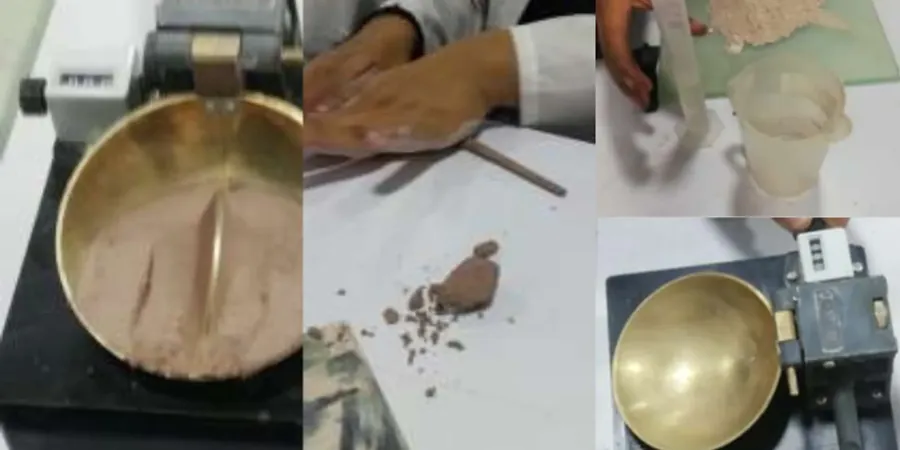
London Clay plasticity index ranges from 30% to 60%, controlling foundation design and slope stability in the capital.
Scope of work
Area-specific notes
Eurocode 7 (EN 1997-1:2004) requires that the design parameters for clays account for plasticity-dependent strength loss. In London, ignoring the Atterberg limits can lead to underestimating heave in dry summers or excessive settlement after wet winters. The shrinkage and swelling potential of London Clay has caused structural damage to thousands of buildings. Without an accurate plasticity index, ground movement predictions become unreliable. Our laboratory follows UKAS-accredited procedures to ensure the reported Atterberg limits reflect the true soil behaviour. We also cross-check with ensayo CPT dissipation tests when pore pressure response is critical.
Standards used
BS 1377-2:1990 (clause 4.3 – liquid limit, clause 5.3 – plastic limit), BS 1377-2, Eurocode 7 (EN 1997-1:2004) – parameter derivation for clays, AASHTO T-89 / T-90
Linked services
Full Atterberg Limits Suite
Determination of liquid limit, plastic limit, plasticity index, and shrinkage limit on undisturbed and remoulded samples. Report includes Casagrande plasticity chart position and USCS classification.
Plasticity-Based Clay Assessment
Correlation of Atterberg results with activity ratio, liquidity index, and consolidation behaviour. Used for foundation heave risk evaluation in London Clay zones.
Linear Shrinkage and Swell Potential
Measurement of linear shrinkage on dried samples and free swell index. Essential for pavement subgrade design and trench reinstatement in high-plasticity clays.
Typical parameters
Q&A
What is the difference between liquid limit and plastic limit?
The liquid limit is the moisture content at which clay changes from a liquid to a plastic state, measured with a Casagrande cup. The plastic limit is the moisture content at which the soil crumbles when rolled into a 3 mm thread. The difference between them is the plasticity index, which indicates the range over which the soil remains plastic.
How much does Atterberg limits testing cost in London?
The typical range for a full Atterberg limits suite including liquid limit, plastic limit, and plasticity index is between £40 and £80 per sample. The final price depends on the number of samples, whether shrinkage limit is required, and the urgency of the results. Contact us for a specific quote based on your project volume.
Why is the plasticity index important for London Clay?
London Clay has a plasticity index that can exceed 60%, placing it in the very high plasticity category. A high PI means the soil undergoes large volume changes with moisture variation. This directly affects foundation heave, settlement, and the design of retaining walls. Engineers use PI to estimate undrained shear strength and select appropriate bearing pressures.
What sample condition is required for Atterberg testing?
We require a minimum of 200 g of soil passing the 425 µm sieve for the liquid and plastic limit tests. The sample should be in its natural moisture condition, sealed in a plastic bag to prevent drying. For disturbed samples, a representative portion must be taken before any sieving for coarser fractions. The laboratory dries the sample at 105°C only after the tests are complete.