BS 5930 and Eurocode 7 (EN 1997-1:2004) set the framework for geotechnical drainage design in London. The city's deep London Clay sequence, combined with overlying river terrace deposits, creates specific drainage challenges. A reliable design must account for the low permeability of the clay (typically 1×10⁻⁹ m/s) and the potential for perched water tables in the gravels. We combine field permeability testing with laboratory data to define hydraulic conductivity accurately. For critical slopes, we integrate permeability testing results to model pore pressure responses and use infiltration testing to design soakaways where ground conditions permit. This method ensures drainage systems function as intended, preventing water buildup behind retaining walls or beneath foundations.
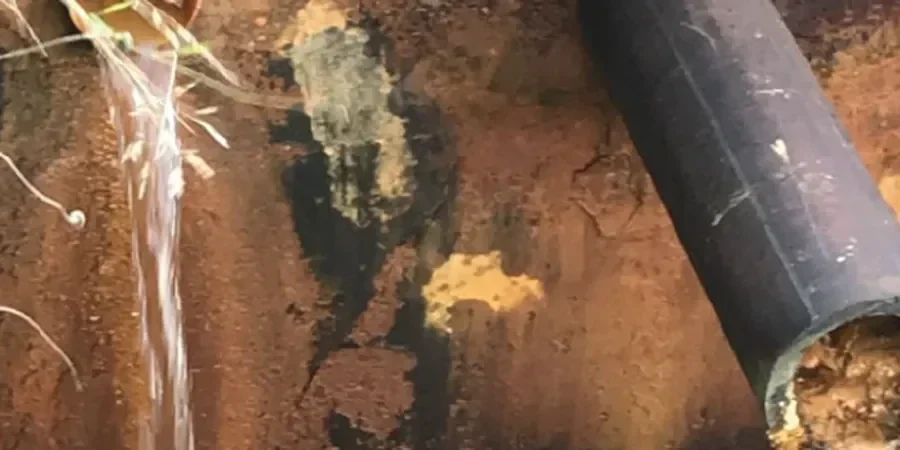
London Clay permeability is highly anisotropic; a design assuming isotropic flow can underestimate drainage requirements by 10x.
Scope of work
- Design of horizontal drainage blankets and vertical relief drains for deep excavations
- Filter compatibility analysis using the Terzaghi and USBR criteria to prevent internal erosion
- Integration with Improvement solutions like wick drains to accelerate consolidation
Area-specific notes
A common mistake contractors make in London is omitting drainage behind basement walls or assuming the clay will drain naturally. It will not. The low permeability means water stays trapped, generating hydrostatic pressure that can crack retaining structures. Another error is using a single drainage blanket without vertical chimney drains on deep cuts. This creates a flow path that bypasses the system, leading to localized failures. We have seen cases where inadequate drainage caused 300 mm of lateral movement in a secant pile wall. Our geotechnical drainage design specifically addresses these risks by modeling transient flow using finite element software (SEEP/W) and specifying redundant drainage paths.
Standards used
BS 5930:2015 (Code of practice for ground investigations), Eurocode 7 (EN 1997-1:2004) – Drainage and groundwater control, CIRIA C750 (Groundwater control for construction), BS EN 12056-3:2000 (Roof drainage, design and installation)
Linked services
Field and Laboratory Permeability Testing
In-situ falling head tests, pumping tests, and constant head triaxial tests to determine k_v and k_h. We use double-ring infiltrometers on shallow horizons and piezometer slug tests at depth. All tests follow BS 5930 and BS 1377-5.
Drainage System Design and Filter Specification
We size pipe diameters, trench widths, and filter layers using the design storm return period. We compute flow rates with the rational method and check filter compatibility using the Terzaghi and USBR criteria. Deliverables include graded filter curves and a construction specification.
Groundwater Modeling and Uplift Analysis
Using SEEP/W and PLAXIS 2D, we model transient pore pressure distributions around excavations and basements. We calculate uplift forces on slabs and design relief drains or pressure relief valves to maintain a factor of safety ≥ 1.5 per Eurocode 7.
Typical parameters
Q&A
Why is geotechnical drainage design critical in London clay?
London Clay has very low hydraulic conductivity (typically 1×10⁻⁹ m/s), meaning water moves extremely slowly. Without a properly designed drainage system, water accumulates behind structures, generating hydrostatic pressures that can cause wall failure, heave, or long-term settlement. A design that ignores anisotropy risks severe underperformance.
What is the typical cost range for a drainage design study in London?
For a standard residential basement or small commercial excavation, the design study typically ranges from £720 to £2.180. This includes a site visit, permeability testing (2-3 tests), finite element modeling, and a full design report. Larger projects with multiple deep drains or complex groundwater modeling may exceed this range.
How long does the drainage design process take?
A typical project takes 2 to 4 weeks from initial site testing to final report. Permeability testing in the field requires one to two days, followed by laboratory analysis (if needed). Modeling and report writing take another week. For urgent projects, we can compress this to 10 working days.
What standards do you follow for filter design?
We apply the USBR and Terzaghi filter criteria to ensure the drainage material retains the base soil without clogging. Specifically, we check that D₁₅ of the filter is ≤ 5 times d₁₅ of the base soil, and D₁₅ ≥ 5 times d₁₅ to allow flow. For London Clay, a 6-20 mm washed gravel typically satisfies both conditions.