London receives around 600 mm of rainfall annually, yet much of it falls on heavily urbanised surfaces where natural drainage is scarce. When designing sustainable drainage systems (SuDS) or assessing soakaway viability, the infiltration rate of the underlying ground becomes the critical parameter. An infiltration test using Porchet or double-ring infiltrometer methods provides that direct measurement. In our background across London boroughs like Camden and Southwark, the variability in London Clay and River Terrace deposits means no single value applies city-wide. That is why field testing on each specific plot is non-negotiable.
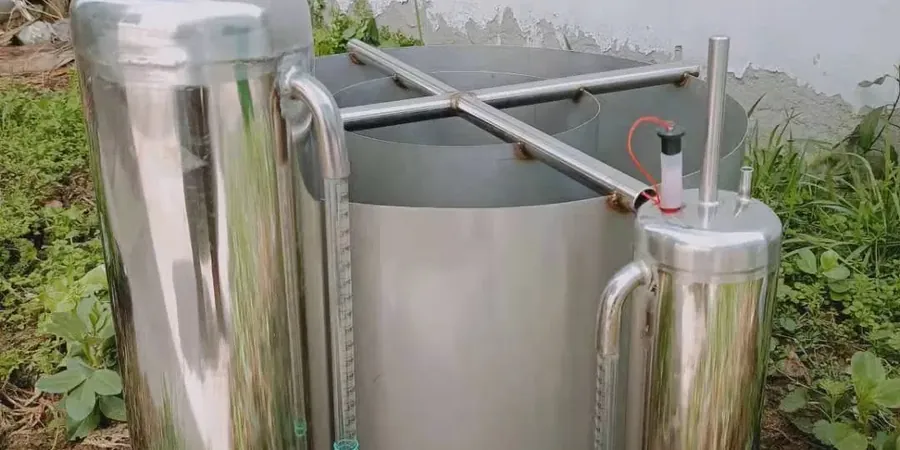
London Clay can drop infiltration rates below 10⁻⁶ m/s, turning a standard soakaway into an oversized excavation unless the test is done correctly.
Scope of work
Area-specific notes
London's shallow geology is dominated by London Clay, a highly plastic material that swells when wet and shrinks during dry spells. In prolonged rain, the clay can absorb water slowly, creating a false low reading if the test is cut short. Conversely, a test run after a dry summer may show artificially high rates due to desiccation cracks. These seasonal effects are not minor — they can lead to undersized drainage systems that flood during winter or oversized pits that waste space. Running the infiltration test at multiple points across the site and repeating it under different moisture conditions is the only way to capture this variability.
Watch how it works
Standards used
BS 5930:2015 Code of practice for ground investigations, BRE Digest 365 Soakaway design, BS EN 1997-2:2007 Eurocode 7 – Ground investigation and testing
Linked services
Double-ring Infiltrometer Testing
Standard double-ring setup with constant-head control, suitable for deep drainage layers and cohesive soils. Data logged at 1-minute intervals until steady-state flow is achieved.
Porchet Infiltration Testing
Single-ring method ideal for shallow excavations and preliminary assessments. Faster to deploy and sufficient for homogeneous granular soils where lateral flow is minimal.
Soakaway Design Support
Interpretation of field data into design infiltration rates per BRE Digest 365, including sensitivity analysis for seasonal variation and groundwater influence.
Typical parameters
Q&A
What is the difference between the Porchet and double-ring infiltrometer methods?
The Porchet method uses a single ring driven into the soil and measures the rate of water level drop under a falling head. The double-ring infiltrometer has an inner ring for measurement and an outer buffer ring that prevents lateral flow, giving a more accurate vertical infiltration rate under constant head. Double-ring is preferred for cohesive soils like London Clay where lateral seepage can distort results.
How long does an infiltration test take on a typical London site?
For most residential or commercial plots in London, a single test takes between 2 and 6 hours to reach steady-state flow. The exact duration depends on soil permeability — sandy gravels may stabilise in under an hour, while clay can take half a day. We normally recommend at least three test locations per site to account for spatial variability.
What is the typical cost range for an infiltration test in London?
For a standard double-ring or Porchet test with one location, you can expect to pay between £250 and £350. This includes mobilisation, on-site testing for up to 6 hours, and a summary report with the calculated infiltration rate. Additional test points or repeat visits for seasonal comparison will increase the price accordingly.
Can infiltration testing be done in winter when the ground is saturated?
The reference range for this service in London is £250 - £350. The final price depends on the project scope and volume.