A six-storey basement excavation near the Thames at Vauxhall needed a retaining wall that could handle high groundwater and stiff London Clay. We ran the geotechnical assessment for that project, combining borehole logs with lab data to define the soil parameters. The wall had to resist lateral earth pressures while keeping the adjacent historic building stable. Before we could recommend a wall type, we completed a study of soil classification to confirm the clay plasticity, and cross-referenced it with permeability testing in the lab to estimate drainage conditions. That data fed directly into the design calculations.
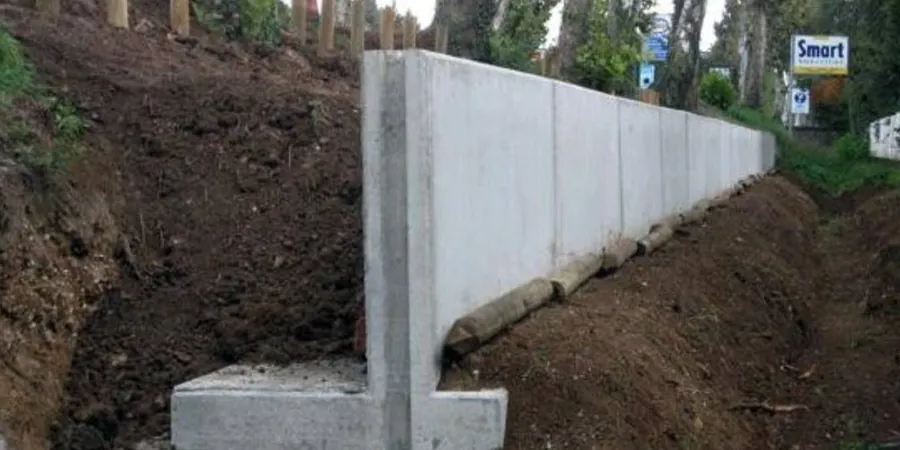
London Clay's high overconsolidation ratio means K0 can exceed 2.0, directly impacting wall design and anchor loads.
Scope of work
Area-specific notes
London has been built and rebuilt for nearly two millennia. The network of old sewers, tunnels, and foundations from previous centuries creates hidden voids and obstructions. On top of that, the water table has risen in many areas since industrial pumping stopped. A retaining wall that doesn't account for these buried structures can fail during excavation. We map these risks early by reviewing historical maps and running a geophysical survey when needed. Combining that with our geotechnical data reduces surprises during construction.
Standards used
BS EN 1997-1:2004 (Eurocode 7 – Geotechnical Design), BS 5930:2015 (Code of practice for site investigations), CIRIA C760 (Guidance on embedded retaining walls)
Linked services
Basement and Cut Wall Design
We design secant pile walls, diaphragm walls, and sheet pile walls for deep basements. Our analysis includes structural check of bending moment, shear, and deflection, plus hydrostatic uplift verification.
Gravity and MSE Wall Design
For embankments and bridge approaches, we design gravity, cantilever, and mechanically stabilized earth (MSE) walls. We specify geogrid layers, facing elements, and drainage details based on your loading conditions.
Typical parameters
Q&A
What does retaining wall design in London typically cost?
A full geotechnical design package for a typical residential basement wall in London ranges from £880 to £3,180. The final cost depends on wall height, soil complexity, groundwater depth, and whether you need a standalone design or a combined investigation-plus-design service.
Do I need a retaining wall design if I only have a shallow excavation?
Any excavation deeper than 1.2 m in London Clay requires a temporary or permanent retaining wall design under CDM regulations. Even shallow cuts in made ground can collapse without proper support, so we always recommend a geotechnical assessment first.
How long does a retaining wall design take for a London site?
A typical design takes 2 to 4 weeks from receiving the ground investigation report. If we also handle the site investigation, add another 2 weeks for drilling, lab testing, and parameter derivation. We can expedite for tight programmes.