London's geology is dominated by the London Clay formation, a stiff overconsolidated clay that in its natural state behaves predictably. However, collapsible soil conditions arise in areas where the clay has been desiccated near the surface, or where man-made fills and terrace gravels sit atop it. These soils can undergo sudden volume loss when wetted under load, a risk that becomes critical when you are planning deep excavations or piled foundations. In our background, collapsible soil evaluation in London must start with careful borehole logging and moisture content profiling, because a seemingly competent clay crust can mask a metastable structure underneath. Before committing to foundation design, it is wise to combine this evaluation with a study of slope stability in adjacent cuttings, and to verify the soil's sensitivity through laboratory compaction tests that simulate wetting collapse.
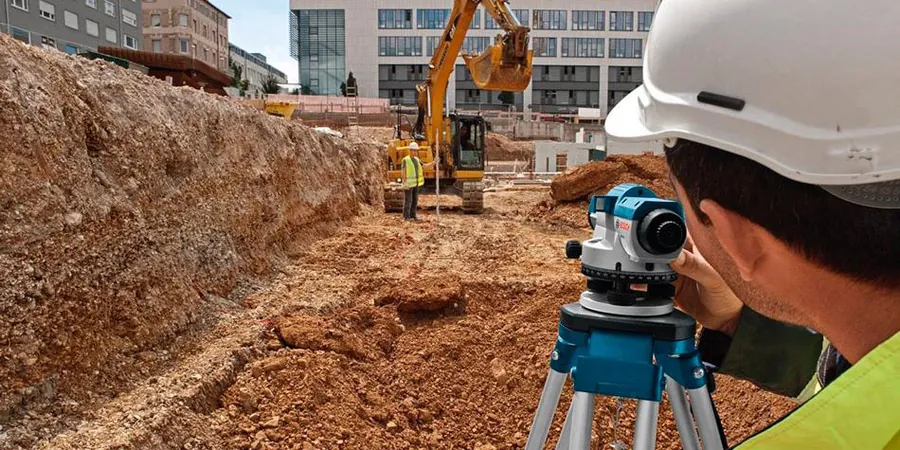
A seemingly competent London Clay crust can hide a metastable structure that collapses instantly when saturated under load.
Scope of work
- Collapse potential is derived from double-oedometer tests on undisturbed samples, following the BS 1377-5 method.
- We also assess the soil fabric using thin-section microscopy when the fill includes demolition rubble or industrial waste.
Area-specific notes
A six-storey residential block near King's Cross was recently founded on piles driven through made ground into the London Clay. During a wet winter, surface water infiltrated the fill layer, causing it to collapse around the pile caps, and the ground floor slab settled 45 mm in three months. The developer had skipped a proper collapsible soil evaluation, assuming the clay alone would carry the load. That assumption cost them £200,000 in remedial grouting and slab replacement. In London, where the water table can rise quickly after heavy rain, ignoring the collapse behaviour of shallow fills is a gamble no engineer should take.
Watch how it works
Standards used
BS 5930:2015 (Code of practice for ground investigations), BS 1377-5 (Standard Test Method for Measurement of Collapse Potential of Soils), Eurocode 7 (EN 1997-1:2004) – Geotechnical design
Linked services
Double-Oedometer Collapse Testing
We run paired oedometer tests on undisturbed samples at natural moisture content and at full saturation, measuring the strain difference that defines collapse potential. Results are reported with full stress-strain curves and CP classification per BS 1377-5.
In-Situ Moisture Monitoring & Fill Characterisation
Using neutron probes and time-domain reflectometry, we track seasonal moisture changes in shallow fills and desiccated clay crusts. Combined with trial pits and dynamic sampling, this service identifies collapse-prone zones before foundation design begins.
Typical parameters
Q&A
What is collapsible soil and how does it affect buildings in London?
Collapsible soil is a loose, metastable material that undergoes sudden volume loss when wetted under load. In London, it commonly occurs in made ground, old backfilled quarries, and desiccated clay crusts. If not detected, it can cause differential settlement, cracked slabs, and tilted superstructures.
How much does a collapsible soil evaluation typically cost in London?
For a standard residential or small commercial site in London, the evaluation ranges between £710 and £1.860, depending on the number of boreholes, laboratory tests, and reporting depth. Larger brownfield projects may fall at the upper end of this range.
Which London boroughs have the highest risk of collapsible soils?
Areas with extensive made ground, such as parts of Tower Hamlets, Newham, and the Isle of Dogs, show elevated collapse potential. The Thames floodplain, including Lambeth and Southwark, also has alluvial and peat layers that can behave collapsibly when disturbed.
What tests are included in a collapsible soil evaluation?
We typically perform double-oedometer collapse tests, moisture content profiling, dry density measurements, and Atterberg limits. For fills, we add particle size distribution and organic content analysis to understand the collapse mechanism.
Can collapsible soil be treated or improved on site?
Yes. Common treatments include dynamic compaction, pre-wetting and surcharging, or replacing the collapsible layer with engineered fill. In London, we often recommend vibro-stone columns or deep soil mixing where access is restricted and headroom is limited.