With over 8.9 million residents and a dense urban fabric built on London Clay, the city presents a distinct challenge for shallow foundation design. The London Clay formation, a stiff overconsolidated clay deposited 50 million years ago, offers moderate bearing capacity but demands careful settlement control. In our background, the key is matching the footing geometry to the site-specific shear strength profile. Before we finalize any shallow foundation design in London, we always run a calicata exploratory program to log the stratigraphy and recover undisturbed block samples for triaxial testing.
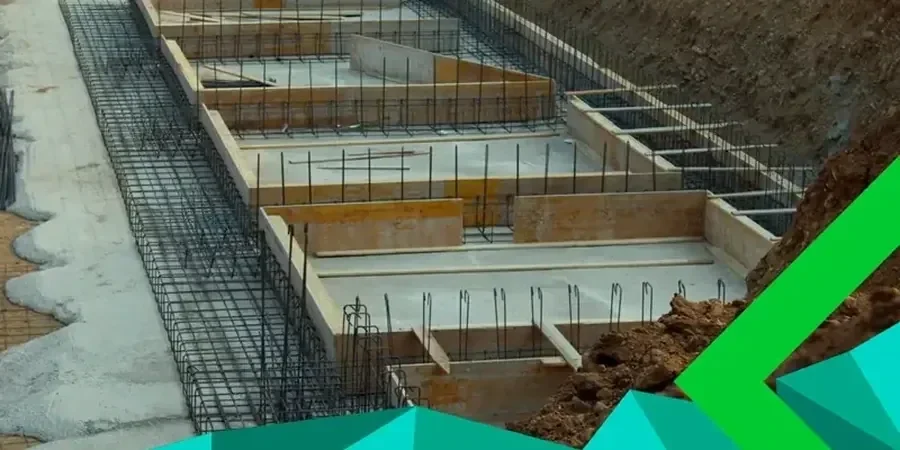
In London, the shallow foundation design must account for made-ground variability and London Clay’s non-linear stiffness at working strains.
Scope of work
Area-specific notes
London’s development history means many sites have variable fill, old basements, or buried foundations from the 1800s. A shallow foundation design that ignores these legacy features risks differential settlement or even bearing failure. We’ve seen cases where a footing sits partly on loose fill and partly on stiff clay — the result is cracking within months. That’s why we always insist on a thorough ground investigation before committing to a shallow solution. The risk is real, but it’s manageable with proper characterisation.
Standards used
BS 5930:2015 (Code of practice for ground investigations), BS EN 1997-1:2004 (Eurocode 7 – Geotechnical design), CIRIA C641 (Foundations in fill)
Linked services
Bearing capacity analysis
Analytical and numerical methods to determine ultimate and allowable bearing pressures for pads, strips, and raft foundations.
Settlement prediction
Elastic and consolidation settlement calculations using oedometer data from undisturbed samples, calibrated to London Clay stiffness.
Foundation detailing
Ground investigation integration
We coordinate with drilling and lab teams to ensure the shallow foundation design uses representative soil parameters from the actual site.
Typical parameters
Q&A
What is the typical bearing capacity of London Clay for shallow foundations?
For a pad footing on stiff London Clay, the allowable bearing pressure typically ranges from 150 to 300 kPa, assuming Cu between 75 and 150 kPa and a factor of safety of 3.0. This must be verified with site-specific triaxial tests.
Do I need a ground investigation before shallow foundation design in London?
Absolutely. London’s made-ground and variable clay profiles make a site investigation essential. Without boreholes, SPT, and lab testing, you cannot reliably estimate bearing capacity or settlement. We recommend a minimum of one borehole per 250 m².
What is the cost range for a shallow foundation design in London?
For a typical residential project, expect between £1.600 and £2.180, including bearing capacity analysis, settlement checks, and a foundation layout drawing. Larger commercial projects with multiple load cases may cost more depending on complexity.