When working in London, the design of micropiles must account for the complex sequence of River Terrace Gravels overlying London Clay, a formation known for its high stiffness and low permeability. Eurocode 7 and BS EN 1997-1:2004 set the framework for geotechnical limit state design, while BS 5930 guides site investigation. In our background, the key is matching the pile capacity model to the actual stress history of the clay – overconsolidation ratios above 2.5 are common here. Before finalising the micropile design, we often run a [MASW survey](/masw-vs30/) to map stiffness profiles across the site, and verify soil layering with test pits in shallow zones. That combination reduces uncertainty in shaft friction estimates significantly.
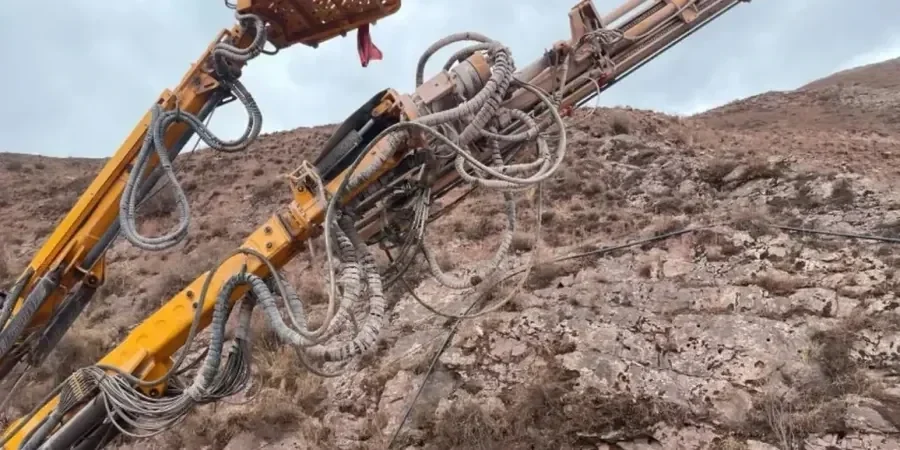
Micropile design in London Clay requires careful calibration of shaft friction against measured shear strengths, not generic correlations.
Scope of work
Area-specific notes
A mistake we see repeatedly in London is treating micropile design as a direct substitute for larger bored piles without adjusting the load-transfer model. Contractors sometimes assume the same shaft friction values from a 600 mm pile apply to a 200 mm micropile – they don’t. The scale effect on side shear is significant, and ignoring it leads to overestimated capacity and potential settlement issues. The other common error is neglecting downdrag on piles installed through fill or soft alluvium overlying the clay. We always check for negative skin friction in the upper 3 to 5 metres, especially near the River Thames.
Standards used
Eurocode 7 (EN 1997-1:2004), BS EN 14199:2015 – Execution of special geotechnical works: Micropiles, BS 5930:2015 – Code of practice for ground investigations, CIRIA C637 – Design of driven and cast-in-place piles
Linked services
Micropile Capacity & Settlement Analysis
We calculate axial and lateral capacity using site-specific soil parameters from London Clay and Terrace Gravels. The analysis follows limit state methodology per Eurocode 7, with settlement estimates based on load-transfer (t-z) curves calibrated to local oedometer tests.
Installation Method Specification & Review
We specify drilling methods (rotary, duplex, or casing-oscillator), grout mix designs, and reinforcement detailing. Our team reviews contractor method statements to ensure compliance with EN 14199 and the project’s structural requirements.
Typical parameters
Q&A
What is the typical load capacity range for micropiles in London?
Design working loads for micropiles in London typically range from 200 kN to 800 kN in compression, depending on diameter, length, and ground conditions. Tension capacities are usually 40 to 60 percent of the compression value. These figures assume a competent founding stratum in the London Clay or Terrace Gravels.
How does micropile design differ from conventional bored pile design in London?
Micropiles rely more on shaft friction along a smaller perimeter, making the bond stress between grout and soil the controlling factor. Unlike bored piles, micropiles often work in groups with close spacing, so group efficiency and interaction with existing foundations must be checked explicitly. The design also requires corrosion protection assessment per EN 14199.
What ground conditions in London are most challenging for micropile design?
The transition zone between Terrace Gravels and London Clay can contain cobbles and dense sand lenses that make drilling difficult and affect bond stress. Also, sites near the Thames with high groundwater and soft alluvium require careful consideration of hydraulic uplift and negative skin friction on the upper pile section.
How much does a micropile design study cost in London?
A complete micropile design study for a typical urban project in London ranges from £1,090 to £4,100. The final cost depends on the number of piles, load cases, and the complexity of ground conditions. This includes the geotechnical interpretation, structural design, and a design report suitable for approval.