Geotechnical laboratory testing forms the backbone of safe and economical construction across London, providing the essential data engineers need to understand the behaviour of the ground beneath our feet. This category encompasses a comprehensive suite of physical and mechanical tests performed on soil and rock samples recovered from site investigations. From the precise determination of particle size distribution through a grain size analysis (sieve + hydrometer) to the strength assessment via an unconfined compression test (UCS), these analyses translate disturbed and undisturbed samples into reliable design parameters. In a city where space is at a premium and projects often push the boundaries of engineering, the role of the soils laboratory is not merely supportive—it is fundamental to managing risk, ensuring regulatory compliance, and preventing costly failures.
London's unique and complex geology makes rigorous laboratory testing absolutely critical. Much of the capital is built upon the London Clay Formation, a stiff, overconsolidated clay known for its significant shrink-swell potential and its impact on foundation design and ground movement. Overlying this are extensive deposits of River Terrace Gravels, Lambeth Group sands and clays, and pockets of made ground from centuries of urban development. The shrink-swell behaviour of the London Clay, in particular, is heavily influenced by its clay mineralogy and requires careful characterisation through tests like the Atterberg limits to predict volume changes with moisture fluctuation. A deep understanding of these local ground conditions, quantified through laboratory data, is what allows engineers to design deep foundations, basements, and earthworks that can withstand London's specific geotechnical challenges.
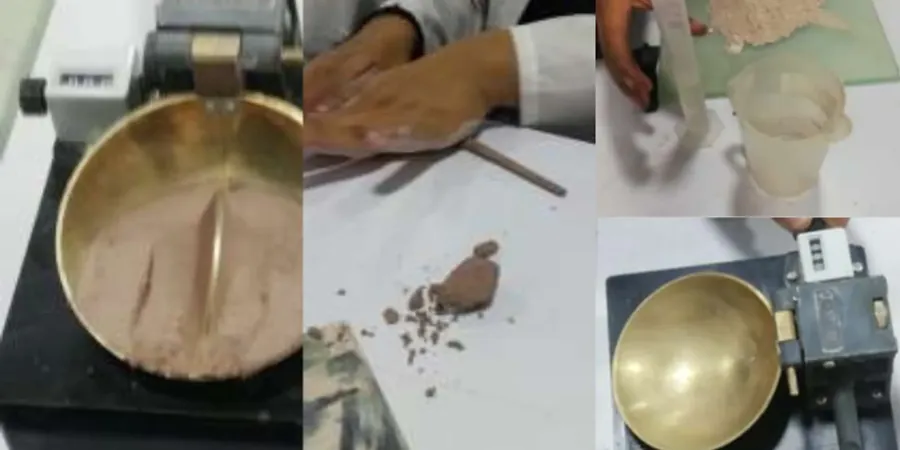
All laboratory testing conducted for projects in the UK must strictly adhere to the relevant British Standards, most notably BS 1377:2024 for soils for civil engineering purposes and BS EN ISO 17892 for geotechnical investigation and testing. These standards dictate everything from sample preparation and test methodology to the calibration of equipment and the format of reporting. A Proctor test (Standard or Modified), for instance, must follow the compaction methodology outlined in BS 1377-4 to determine the maximum dry density and optimum moisture content, a key parameter for controlled fill and highway construction. Adherence to these standards is not optional; it is a mandatory requirement for technical approval by bodies such as local authorities, Network Rail, and National Highways, ensuring that all results are consistent, repeatable, and legally defensible.
The types of projects in London that demand this level of laboratory insight are incredibly diverse. Deep basement excavations in central London rely on accurate undrained shear strength data from triaxial and UCS tests to design robust retaining walls and prevent ground collapse. Major infrastructure schemes like the HS2 or the Thames Tideway Tunnel require thousands of classification and strength tests for tunnel boring machine selection and spoil management. Even smaller-scale residential developments on infill sites necessitate a thorough soil mechanics study to assess contamination, bearing capacity, and soakaway potential. Highway and pavement design frequently calls for a laboratory CBR test to evaluate the strength of the subgrade, ensuring the long-term performance of roads and access routes. In every case, the data generated in the laboratory directly shapes the design, reduces the need for over-engineering, and provides the evidence base for safe, sustainable construction.
Quick answers
What is the typical turnaround time for a standard geotechnical laboratory testing suite in London?
Turnaround times vary depending on the test suite, but for routine classification tests like moisture content, Atterberg limits, and particle size distribution, results are typically available within 5 to 7 working days. More advanced strength tests, such as triaxial or consolidation testing, require longer curing and shearing phases, often taking 2 to 4 weeks. Urgent projects can often be accommodated with express solutions for an additional fee, ensuring rapid data delivery for critical decision-making.
How should soil samples be prepared and transported to a UK laboratory to maintain their integrity?
Sample integrity is paramount for reliable results. Disturbed samples for classification tests should be sealed in heavy-duty plastic bags and labelled. Undisturbed samples, such as those taken in U100 tubes or Shelby tubes, must be sealed with wax or plastic caps immediately on extrusion, kept upright, and transported in shock-absorbent crates. They must be protected from extreme temperatures and vibrations, as per BS EN ISO 22475-1, and delivered to the laboratory as quickly as possible to prevent moisture loss.
What accreditation should a geotechnical laboratory hold to provide valid test results for a London construction project?
A laboratory should hold UKAS (United Kingdom Accreditation Service) accreditation to ISO/IEC 17025 for the specific tests being requested. This demonstrates that the facility meets rigorous international standards for competence, impartiality, and consistent operation. For most major civil engineering and building projects in London, UKAS-accredited test reports are a mandatory requirement from regulators, clients, and warranty providers to ensure the data is technically valid and legally defensible.
What is the difference between a Standard and Modified Proctor compaction test?
The primary difference lies in the compactive effort applied. The Standard Proctor test uses a 2.5 kg rammer dropped from 300 mm, typically in a 1-litre mould, simulating lighter compaction. The Modified Proctor test uses a heavier 4.5 kg rammer dropped from 450 mm, applying roughly four and a half times the compactive energy. The Modified test is specified for projects requiring higher density and strength, such as major highway embankments or heavy-duty airfield pavements, while the Standard test may suffice for low-rise residential earthworks.